
The mug tips. Someone drops a snack. Your favourite seat starts collecting the evidence of everyday life. Cleaning a fabric sofa can feel like a bigger job than the spill itself, especially when you are unsure how much water to use or whether a machine is suitable.
The short answer: check the sofa maker’s care instructions first. If they permit water-based extraction cleaning, remove loose debris, test an inconspicuous area, use the approved solution sparingly and extract the moisture before allowing the upholstery to dry fully. A portable spot cleaner gives you a practical way to treat a local mess without manoeuvring a full-size carpet machine around the room.
This guide covers small everyday marks on suitable fabric upholstery. It does not assume every sofa can be wet cleaned. The right finish starts with the right method for your fabric.
Start with the sofa, not the machine
Look under the cushions, beneath the frame or in the paperwork for care instructions. Contact the furniture maker if the method is unclear. A zip on a cushion cover is not proof that it is machine washable, and a fabric that looks robust may still react badly to moisture.
Water-based cleaning permission is also not automatically permission to use an extraction machine. Check both the cleaning method and the solution. Solvent-only fabrics, delicate upholstery and unknown finishes need their own guidance.
For example, DFS’s fabric-care guidance directs owners towards suitable care products for their upholstery. The useful principle is to follow the instructions for the sofa you own rather than a general household cleaning recipe.
What to have ready
- A vacuum suitable for dry upholstery debris, with an appropriate attachment.
- Clean white absorbent cloths.
- Your sofa’s care instructions.
- A portable extraction cleaner, if permitted for the fabric.
- A solution approved for both the fabric and the machine.
- A clear place for the machine and enough time for the sofa to dry.
Keep the clean cloths separate from cloths used for floors or kitchen grease. Clear mugs, throws and cushions from the work area before bringing the cleaner over. This small bit of preparation makes a local clean much easier to finish.
How to spot clean a fabric sofa, step by step
1. Pick up loose material and blot fresh liquid
Lift away crumbs or other loose solids without pressing them into the weave. With a fresh spill, gently blot using a clean white cloth. Work patiently and use a fresh part of the cloth as it absorbs liquid. Avoid spreading the spill by rubbing hard across it.
2. Remove dry dust around the area
Once you have dealt with the fresh liquid, use a suitable dry vacuum on dry surrounding upholstery. Pay attention to cushion joins where biscuit crumbs and dust collect. Do not use an ordinary dry handheld vacuum to suck up the spill.
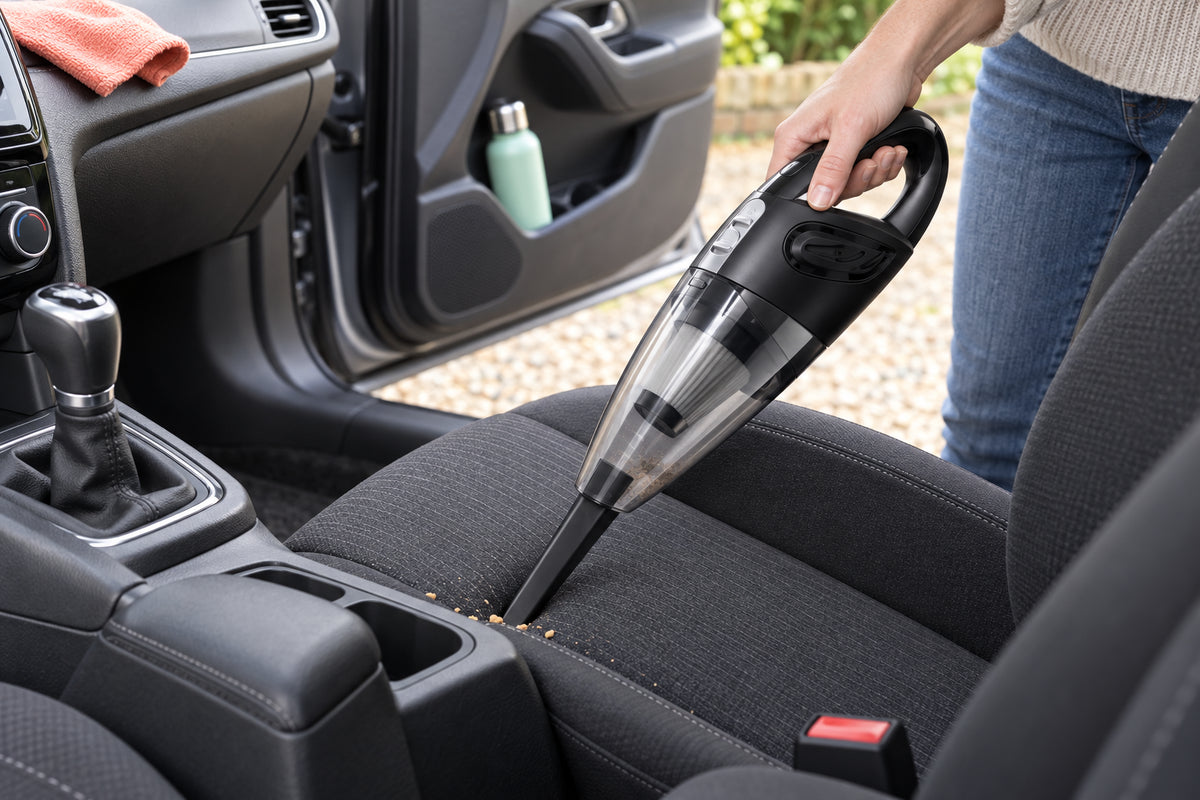
The Pennick cordless handheld vacuum can help with those small dry crumbs between bigger cleans. Keep its role separate from the wet extraction stage.
3. Test before treating the visible seat
Follow the furniture maker’s testing instructions on a hidden area. Let the test dry completely, then check for colour change, texture change or a visible ring. Stop if the result is different from the surrounding fabric. A successful wet patch is not a complete test until you have seen it dry.
4. Prepare the spot cleaner
Fill and fit the clean-water tank following the machine manual, including the permitted water temperature and solution dilution. Check that the recovery tank and hose are correctly seated. Put the machine somewhere stable, with its cable clear of your route around the sofa.
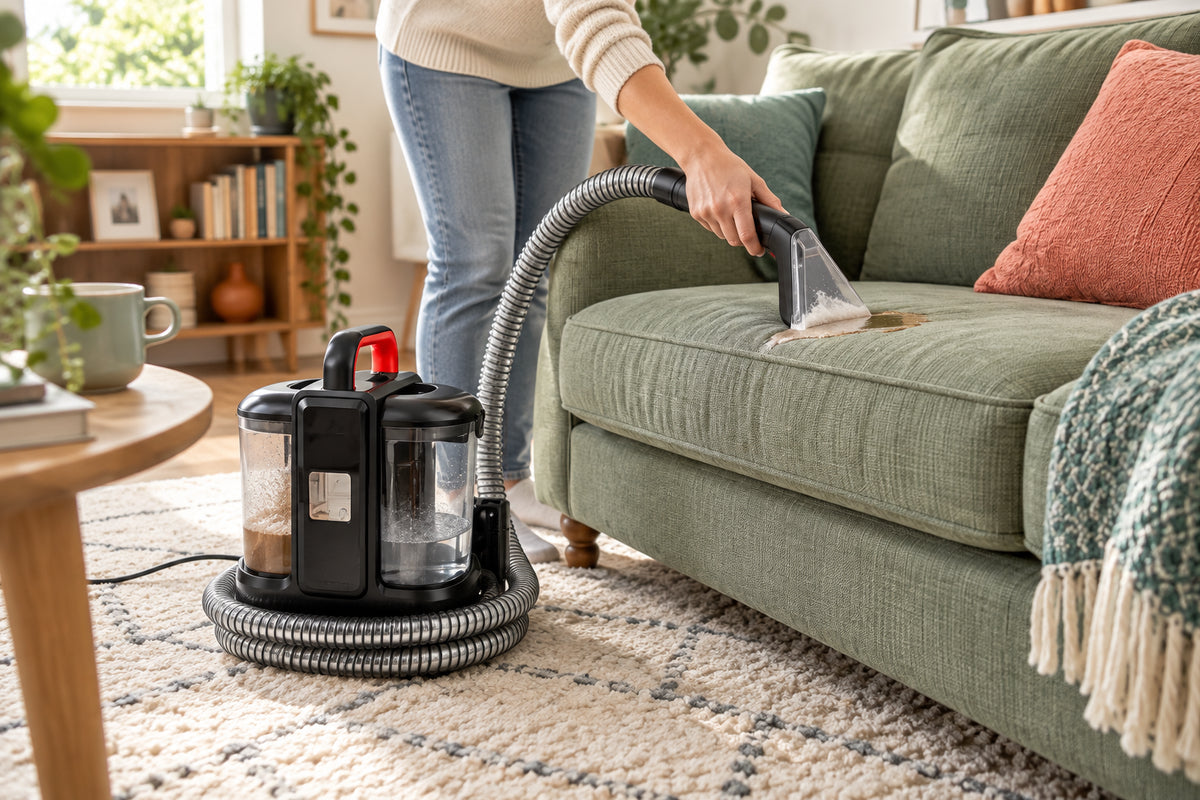
The Pennick portable carpet and upholstery spot cleaner has separate clean- and dirty-water tanks and a handheld cleaning tool. You can bring the machine to the seat that needs attention and work on that area, instead of treating every cushion because one drink has escaped.
5. Use controlled passes
Follow the machine’s instructions for applying solution and extracting it. Keep the tool in contact with the fabric as directed. The aim is controlled cleaning of the surface, not soaking the filling. Avoid repeatedly adding solution just because a stubborn mark has not disappeared immediately.
6. Extract moisture and allow complete drying
Use the instructed extraction passes without adding more liquid when appropriate. Leave the cleaned area uncovered and allow suitable airflow. Keep people and pets off it until it is fully dry. Drying time varies with the upholstery, moisture used, room conditions and ventilation, so a universal “ready in an hour” promise would not help you plan.
Why can sofa cleaning leave water marks?
Uneven wetting, residue and changes as the fabric dries can leave a visible edge. Over-wetting is a particular reason to keep the process controlled: Plush’s fabric-care guide specifically warns that it can cause water marks.
More water is not an automatic fix for a ring. If a mark persists after the fabric has dried, or you do not know the material, ask the furniture maker or an upholstery specialist before treating a larger area.
Small habits that make the next clean less of a chore
Keep suitable cloths somewhere easy to reach. Deal with a spill when you notice it, follow your sofa’s regular care routine and clear dry crumbs before they become part of the cushion landscape. After using the machine, empty and clean its removable parts as the manual directs, then let them dry before storage.
A spot cleaner is most useful when it has a clear job: an occasional patch on compatible upholstery or carpet. It is not a guarantee that every old stain will disappear, and it does not replace specialist care where the fabric needs it.
Fabric sofa cleaning questions
Can I use a carpet spot cleaner on my sofa?
Only when both the machine and sofa instructions allow that use. Check the fabric, solution and attachment before starting.
Should I add washing-up liquid to the machine?
Use only a solution allowed by the machine and upholstery guidance. A household detergent is not automatically an appropriate extraction-cleaner solution.
Can a spot cleaner remove an old sofa stain?
Results depend on the substance, fabric, age of the mark and previous treatments. Assess the dry result before repeating treatment, and seek specialist advice if the mark or fabric is uncertain.
Which tool is for crumbs, and which is for spills?
A suitable dry vacuum handles loose dry debris. An extraction spot cleaner tackles permitted wet cleaning on compatible fabric. Using the right tool for each stage keeps the process simple.
Make the sofa clean-up easier to start. Explore the portable spot cleaner, or browse Pennick’s cleaning helpers to find the tool for the job.
Next: tackle crumbs between car seats or simplify everyday laminate floor cleaning.

Leave a comment
This site is protected by hCaptcha and the hCaptcha Privacy Policy and Terms of Service apply.