
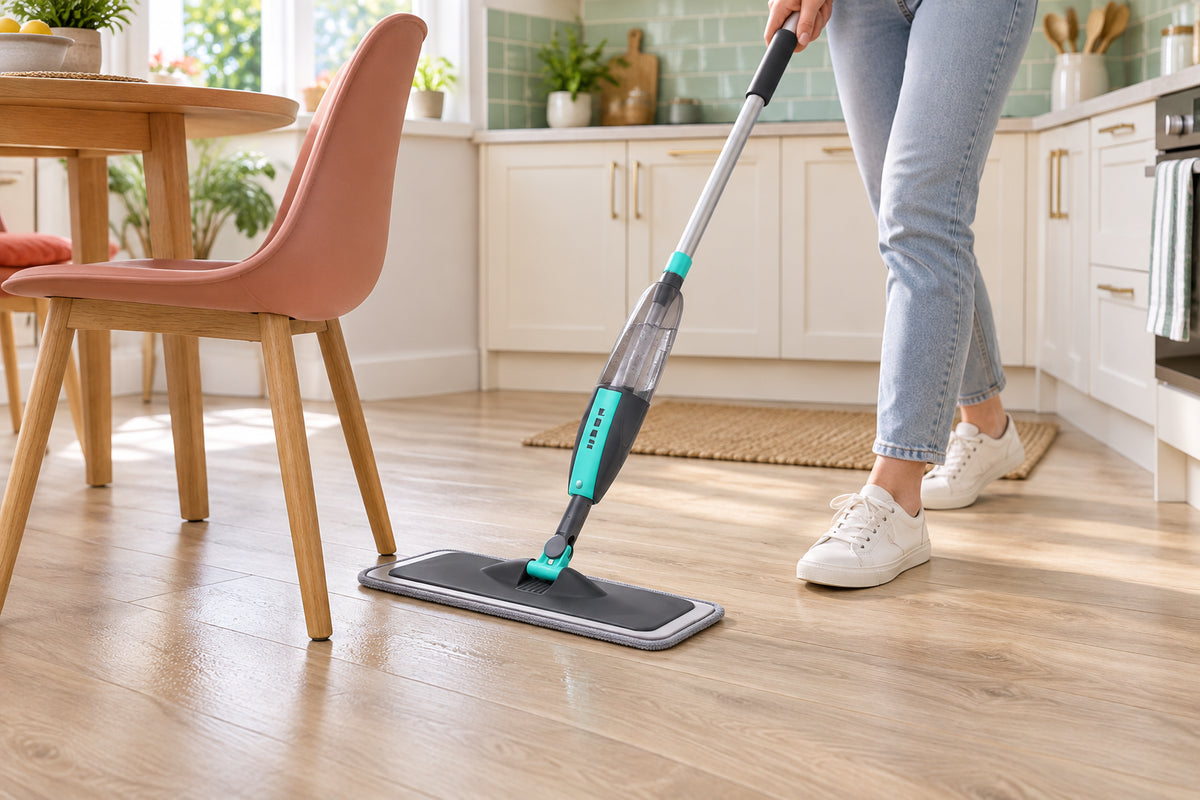
You want the kitchen floor to feel fresh again. You do not particularly want to fill a bucket, carry it through the house and turn a few marks under the table into a full cleaning event. A spray mop makes those smaller jobs easier to begin, with a refillable bottle and spray control close to hand.
You can use a spray mop on laminate when the flooring maker permits damp cleaning with that method. Remove loose grit first, use the recommended solution and keep the pad lightly damp. Avoid puddles, change or clean a dirty pad, and let the floor dry before walking over it.
The word “laminate” covers different products and finishes. Your own floor’s care instructions decide the method. A spray mop helps control the application; it does not make every floor waterproof.
Why a spray mop suits the little jobs
Breakfast leaves a patch under the table. Shoes leave a few marks near the door. The room does not necessarily need a full wet clean, but the patch still bothers you. A manual spray mop keeps the water bottle attached to the handle so you can bring the tool straight to the area.
The Pennick microfibre spray mop has a handle trigger, refillable bottle and flat swivel head. On compatible floors, its microfibre pad can be used dry for dusting or with spray for damp cleaning. There is no powered steam function and no battery to charge.
That makes it a straightforward choice when your priority is a quick floor refresh. For frequent dust across several rooms, a suitable vacuum may still be the useful first step.
Check these three things before filling the bottle
1. What does your flooring maker allow?
Find the care guide for the installed floor, including any instructions supplied by the fitter. Look for the approved cleaning method, product and moisture limits. Damaged edges, open joints or an uncertain surface deserve advice before you start spraying.
2. Is the cleaning solution suitable?
Choose a solution allowed by both the floor and mop guidance. Follow its dilution instructions. More concentrate is not a shortcut to a better result. Avoid making a new recipe from several cleaning products, and do not assume a strong kitchen cleaner belongs in the mop bottle.
3. Is the pad clean and fitted properly?
Check the pad for grit and debris, then attach it securely so it covers the head as intended. A dirty pad can keep moving yesterday’s mess around. Having a clean pad ready is often more useful than adding extra liquid to a pad that needs washing.
How to clean laminate with a microfibre spray mop
Step 1: Clear a small working area
Pick up toys, food pieces and loose objects. Move a chair if that creates a comfortable route around the table. You do not have to reorganise the whole room to address the area that needs attention. Start somewhere you can finish without walking straight back over the damp floor.
Step 2: Remove loose dry debris
Use the floor-approved dry method first. This might be a suitable vacuum or clean dry mop. The aim is to remove the crumbs and grit before making the pad damp. Check any vacuum floor head against the floor maker’s guidance rather than assuming every brush is suitable.
Quick-Step’s laminate-cleaning guidance separates dry maintenance from slightly damp cleaning and specifies suitable equipment. It also recommends mopping along the planks to help avoid drying streaks. Follow the equivalent instructions for your particular flooring.
Step 3: Fill and test the spray
Fill the bottle according to the mop instructions, using the approved solution at its correct concentration. Fit it securely. Begin on a small area, using only enough spray to support lightly damp cleaning. Pause to judge the moisture instead of repeatedly pressing the trigger out of habit.
Step 4: Mop in controlled sections
Guide the head across an accessible section, then move to the next. Use the swivel joint to work around chair legs instead of forcing the handle against them. Avoid saturating joins or leaving liquid sitting along skirting boards. If you notice excess moisture, deal with it promptly using the floor-approved method.
Step 5: Check the pad as you go
When the pad looks dirty or starts leaving a trail, stop and clean or replace it according to the care instructions. The refillable bottle removes the need to carry a bucket for a small job, but the pad still needs attention. For a larger clean, plan how you will rinse or change it before starting.
Step 6: Let the floor dry and reset the kit
Keep foot traffic off the damp area until dry. Check the floor from a normal standing position rather than chasing every reflection while it is still wet. Clean the reusable pad and care for the bottle as directed, then store the mop ready for the next small clean-up.
Spray mop or traditional mop and bucket?
Choose by the job and the floor instructions, rather than assuming one tool wins everywhere.
- Small patch after breakfast: a spray mop is convenient to bring out for a controlled local clean.
- A larger approved damp clean: either method may be suitable, but you need a plan for keeping the pad or mop head clean.
- Loose dry dust: use an appropriate dry-cleaning tool before adding moisture.
- A floor that does not permit damp cleaning: follow its approved method instead of relying on a particular mop design.
With a traditional mop, wringing controls the water carried onto the floor. With a spray mop, your trigger use and pad condition play a large part. Both still depend on sensible moisture control.
Why does my floor feel sticky after mopping?
Check the basics before changing tools: was the solution correctly diluted, was it approved for the floor, and was the pad clean? Residue or redistributed dirt may be involved, but a sticky finish cannot be diagnosed from the tool alone.
Do not keep layering on more cleaning liquid. Return to the floor maker’s instructions for removing residue. If the finish changes, boards lift or a persistent mark remains, stop and ask for product-specific advice.
Make floor care fit into the day
Keep the mop and a clean pad accessible. Choose a small, repeatable moment, such as tidying the kitchen after breakfast, rather than letting the job grow in your head. When the floor only needs dry dust removal, give it that. Save damp cleaning for the method and frequency your floor requires.
If you want help keeping on top of more rooms, explore the JONR P20 Pro robot vacuum and mop. It offers a different approach to regular floor care; surface suitability and setup still matter.
Spray mop questions
Can I put any floor cleaner in the bottle?
No. Use a solution compatible with both the mop and your flooring, at the stated dilution.
Can I use the microfibre pad dry?
The Pennick spray mop supports dry dusting as well as damp cleaning on compatible surfaces. Start with a clean pad.
Is a spray mop a steam mop?
No. This manual spray mop applies liquid using a handle trigger. It does not produce steam.
Will it clean under furniture?
The flat swivelling head helps with accessible spaces, but clearance depends on the furniture. Guide the head gently and do not force it into a gap.
Less setup for the small floor jobs. Explore Pennick’s microfibre spray mop and find the option that fits your home.
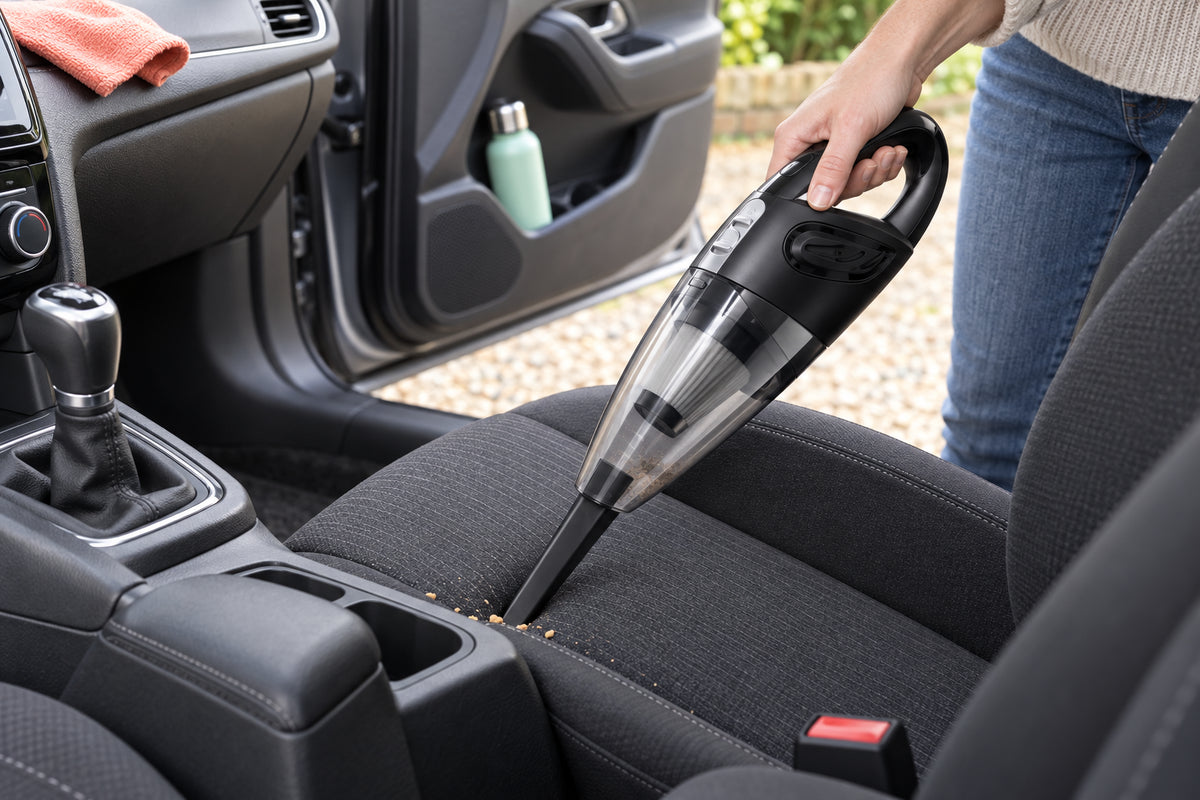
More practical help: fabric sofa spot cleaning and cleaning car-seat crumbs.

Leave a comment
This site is protected by hCaptcha and the hCaptcha Privacy Policy and Terms of Service apply.